
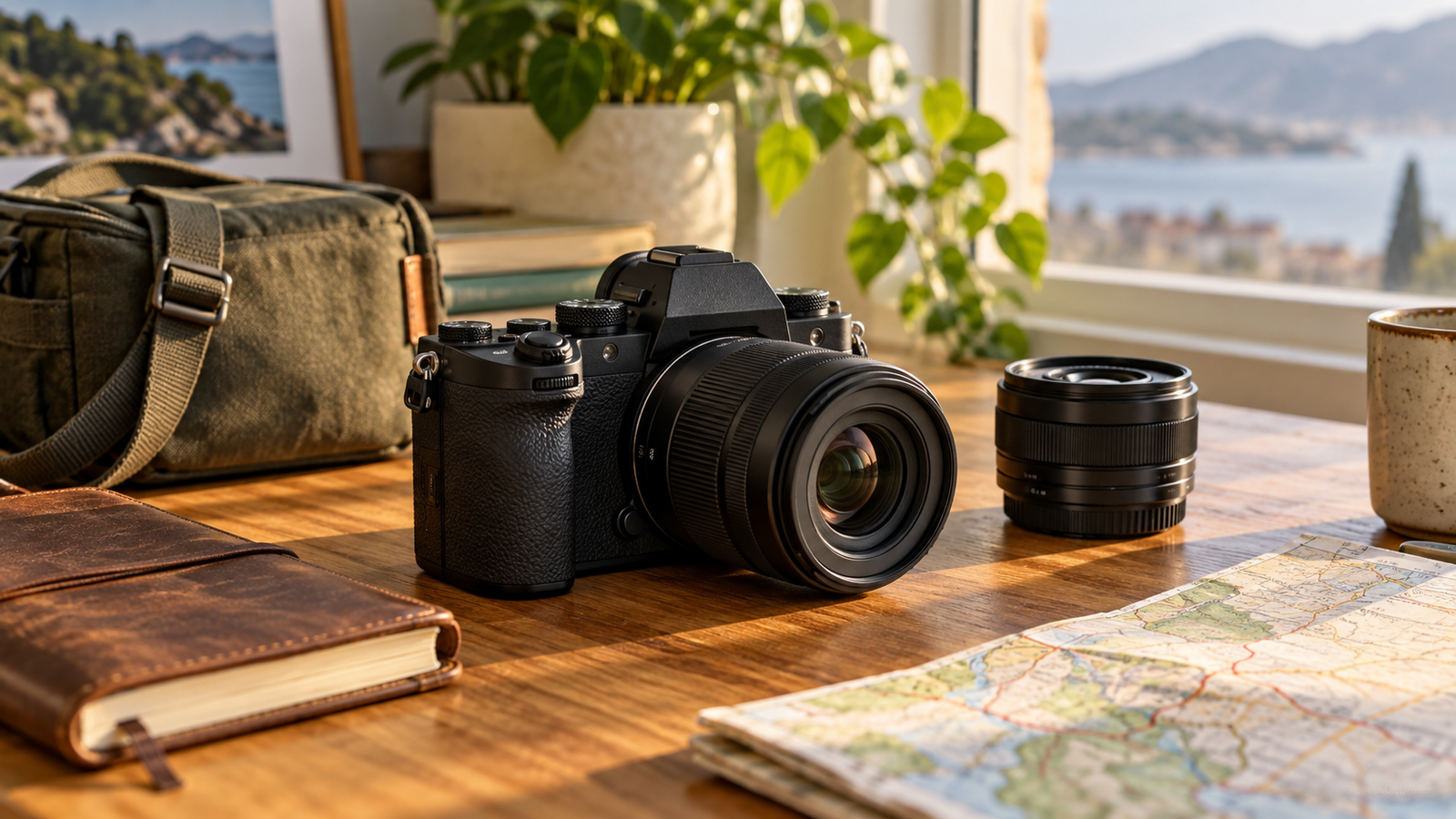
The best mirrorless camera is not necessarily the one with the largest sensor or the longest specification sheet. For most buyers, the right choice is the camera that is comfortable to carry, easy to operate and supported by lenses that match the way they actually shoot.
For beginners, our top recommendation is the Nikon Z50II. The Canon EOS R50 is the more affordable alternative, while the Sony a6700 offers the strongest all-round APS-C feature set for buyers willing to spend more. Travelers should also consider the long-lasting Fujifilm X-S20, the weather-resistant OM System OM-5 Mark II and the compact full-frame Sony α7C II.
Last updated: October 1, 2026. Availability and retail prices can change.
How we chose: We compared current manufacturer specifications, system size, autofocus, stabilization, battery life, lens choice and practical limitations. This is a researched buying guide; ElectroPro has not laboratory-tested every camera listed.
Affiliate disclosure: As an Amazon Associate, ElectroPro earns from qualifying purchases. This does not affect the price you pay or our editorial recommendations.
The best mirrorless cameras in 2026: quick picks
- Best for most beginners: Nikon Z50II
- Best affordable option: Canon EOS R50
- Best premium APS-C camera: Sony a6700
- Best for travel and battery life: Fujifilm X-S20
- Best for hiking and bad weather: OM System OM-5 Mark II
- Best compact full-frame camera: Sony α7C II
Mirrorless camera comparison
| Model | Sensor | Resolution | In-body stabilization | Best for | Main limitation |
|---|---|---|---|---|---|
| Nikon Z50II | APS-C | 20.9MP | No | Most beginners | Modest battery rating |
| Canon EOS R50 | APS-C | 24.2MP | No | Budget buyers | Few direct controls |
| Sony a6700 | APS-C | 26MP | Yes | Photo and video | Premium price |
| Fujifilm X-S20 | APS-C | 26.1MP | Yes | Travel and hybrid use | Not weather-sealed |
| OM System OM-5 Mark II | Micro Four Thirds | 20.4MP | Yes | Hiking and outdoors | Smaller sensor |
| Sony α7C II | Full frame | 33MP | Yes | Compact full-frame kit | Single card slot |
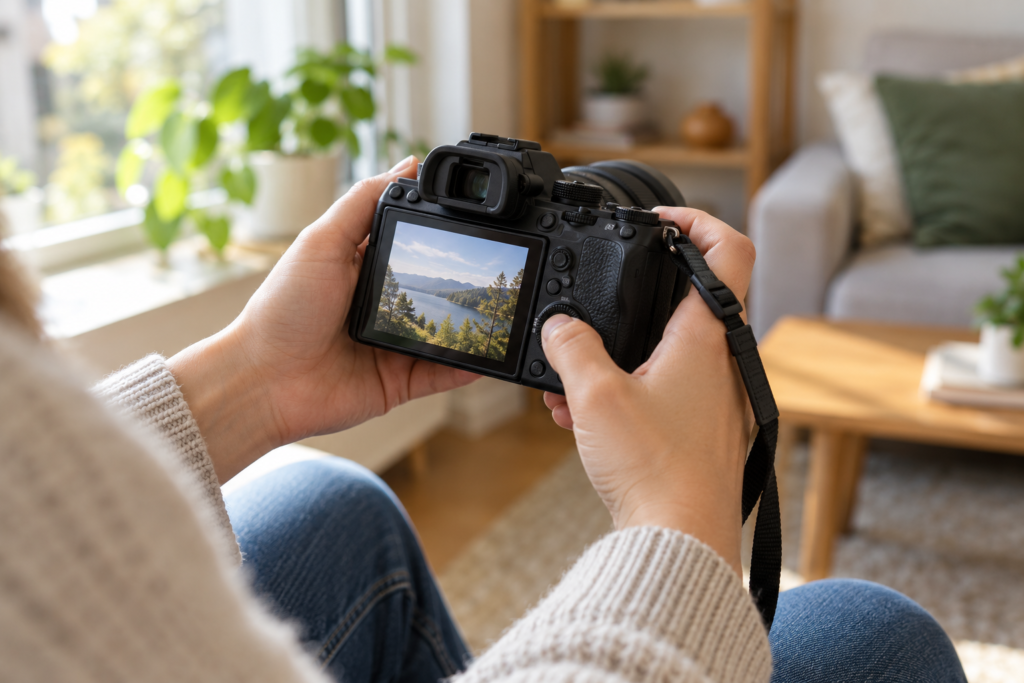
1. Nikon Z50II — best mirrorless camera for most beginners
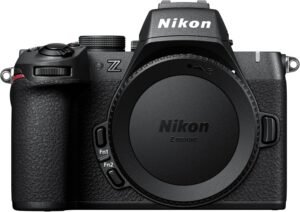
The Nikon Z50II is our first choice for a beginner who wants a camera that remains useful as their skills improve. Its 20.9MP APS-C sensor is paired with Nikon’s current autofocus and image-processing technology, while the familiar grip, electronic viewfinder and fully articulating screen make it approachable for both photography and video.
It records 4K/60p video and accepts Nikon Z-mount lenses. The system can grow from a small kit zoom into telephoto, portrait and wide-angle setups. Nikon’s SnapBridge app also provides wireless transfers and remote shooting.
The main compromise is the absence of in-body image stabilization. Stabilized lenses help, but buyers who regularly shoot handheld in low light may prefer the Sony a6700 or Fujifilm X-S20. Nikon rates the Z50II at roughly 220–250 still images per charge depending on how it is used, so a spare battery is sensible for travel.
Best for: beginners, family photography, travel and users who want room to grow.
Skip it if: in-body stabilization or very long battery life is essential.
2. Canon EOS R50 — best affordable mirrorless camera
The Canon EOS R50 is a compact entry point into interchangeable-lens photography. Its 24.2MP APS-C sensor, Dual Pixel CMOS AF II autofocus and subject detection remove much of the difficulty from photographing people, pets and everyday action. It can also record oversampled 4K/30p video.
Canon’s menus and automatic modes are friendly to people moving up from a phone. The body is genuinely small, although the compact design provides fewer physical controls than more advanced cameras. There is no in-body stabilization, and the small battery is another reason to carry a spare.
The EOS R50 makes the most sense as a lightweight kit with an RF-S zoom. Before investing heavily, check that the RF or RF-S lenses you want are available at a price that fits your long-term budget.
Best for: first-time camera owners, families and buyers keeping the initial cost down.
Skip it if: you want extensive direct controls or sensor-shift stabilization.
3. Sony a6700 — best premium APS-C all-rounder
The Sony a6700 is the strongest option here for buyers who want one compact camera for serious photography and advanced video. It combines a 26MP APS-C sensor with in-body stabilization, sophisticated subject-recognition autofocus and Sony’s broad E-mount lens selection.
Its autofocus is particularly useful for moving people, animals and travel subjects. Video users receive 4K recording options up to 120p, although the highest frame-rate mode applies a crop and demanding settings can generate more heat during extended recording.
The a6700 costs considerably more than the Nikon Z50II or Canon EOS R50, but its stabilization, autofocus and mature lens ecosystem reduce the need to replace the body quickly. It is the camera to choose when portability matters but entry-level limitations do not appeal.
Best for: enthusiasts, hybrid photo/video creators, action and long-term system building.
Skip it if: you need the lowest-cost beginner kit.
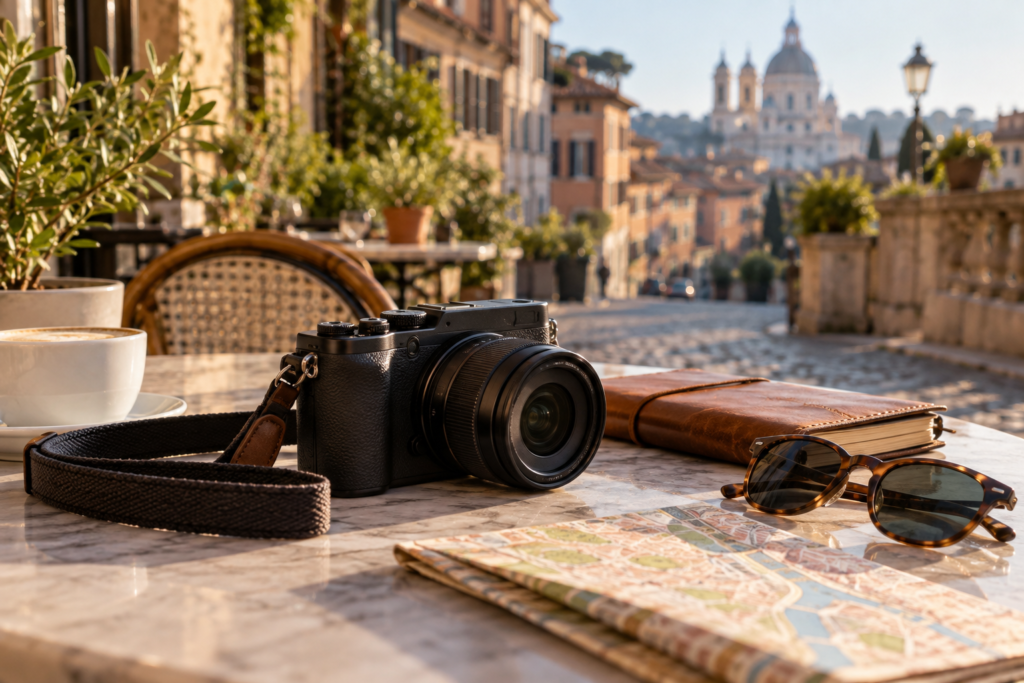
4. Fujifilm X-S20 — best for travel and battery life
The Fujifilm X-S20 combines a 26.1MP APS-C sensor, five-axis in-body stabilization and a large battery in a body weighing approximately 491g with battery and memory card. Fujifilm rates it for about 750 images in normal mode or 800 in economy mode, which is unusually useful on long sightseeing days.
Its fully articulating screen, 6.2K video option and accessible controls make it a good hybrid camera. Fujifilm’s Film Simulation modes can also produce appealing JPEG files without extensive editing.
The principal travel-related weakness is the lack of official weather sealing. If rain, dust and rough outdoor use are major concerns, the OM-5 Mark II is the more reassuring choice. The X-S20 is better suited to city travel, family trips and mixed photography/video use.
Best for: travel, long shooting days, JPEG users and hybrid creators.
Skip it if: you require a weather-resistant body.
Check Fujifilm X-S20 on Amazon
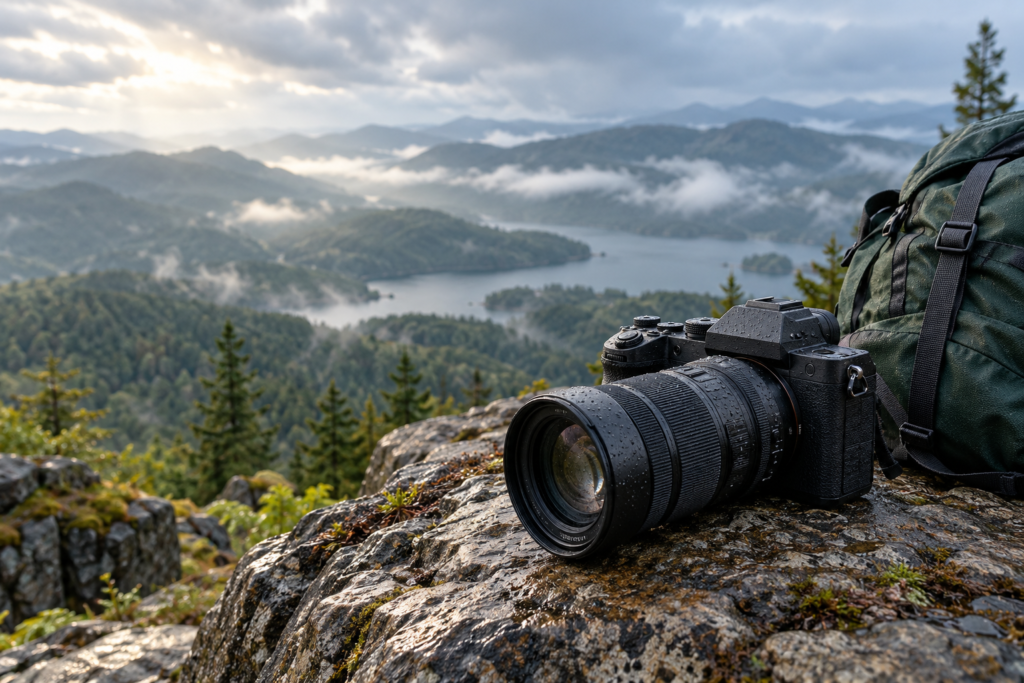
5. OM System OM-5 Mark II — best for hiking and outdoor travel
The OM-5 Mark II is designed for photographers who value a small, durable system. It uses a 20.4MP Micro Four Thirds sensor, built-in five-axis stabilization and a weather-resistant body. The smaller sensor also allows many Micro Four Thirds lenses to remain noticeably lighter than comparable full-frame options.
This is an excellent hiking and landscape companion because stabilization makes handheld shooting at slower shutter speeds more practical. It also offers 4K video and a wide range of computational photography features.
A Micro Four Thirds sensor cannot match a modern full-frame sensor for maximum low-light quality or very shallow depth of field. For daylight travel, landscapes and situations where carrying less equipment matters more than ultimate sensor performance, that trade-off can be worthwhile.
Best for: hiking, wet weather, landscapes and lightweight telephoto kits.
Skip it if: full-frame low-light performance is your priority.
6. Sony α7C II — best compact full-frame mirrorless camera
The Sony α7C II provides a 33MP full-frame sensor, in-body stabilization and strong subject-recognition autofocus in a relatively compact body. It is the best choice in this guide for buyers who want full-frame image quality without carrying a conventional large camera body.
It is especially attractive for portraits, low-light travel and photographers who already understand why they want full frame. Sony’s extensive E-mount catalogue includes compact primes as well as professional zooms, but lens size and price still determine whether the complete kit remains travel-friendly.
The compact body brings compromises: the electronic viewfinder is smaller than those on many larger full-frame cameras, and there is only one memory-card slot. Beginners should also remember that an APS-C camera with a good lens is usually better value than a full-frame body paired with an unsuitable budget lens.
Best for: experienced travelers, portraits, low light and compact full-frame kits.
Skip it if: you want the simplest or least expensive first camera.
How to choose a mirrorless camera
Start with the complete system, not only the body
A camera purchase also commits you to a lens mount. Before choosing a body, list the lenses you may want during the next several years and compare their size and cost. A cheaper camera can become expensive if the appropriate lenses are unavailable or outside your budget.
APS-C, Micro Four Thirds or full frame?
APS-C offers the best balance for most beginners: good image quality, manageable lenses and sensible prices. Micro Four Thirds is particularly attractive when portability, stabilization and telephoto reach matter. Full frame provides greater flexibility in low light and depth of field, but bodies and especially lenses can cost and weigh more.
Do you need in-body stabilization?
In-body image stabilization, usually shortened to IBIS, compensates for camera movement. It is helpful for handheld still images at slower shutter speeds and for video, but it cannot freeze a moving subject. Lens-based stabilization can still work well on cameras without IBIS.
Autofocus and subject detection
Modern subject-detection autofocus can recognize people, eyes, animals, vehicles and other targets. It makes photographing unpredictable subjects easier, although performance varies by model and shooting conditions. For children, pets, wildlife and sports, autofocus should carry more weight than a small difference in megapixels.
Battery life and charging
Mirrorless cameras continuously power a screen or electronic viewfinder, so battery life is generally shorter than on many DSLRs. USB charging is convenient, but a spare genuine or reputable compatible battery remains useful for travel.
Handle the camera before buying
Specifications cannot tell you whether a grip fits your hand, a viewfinder suits your eyesight or the controls feel natural. If possible, try the camera in a shop with the type of lens you expect to use.
Frequently asked questions
Which mirrorless camera is best for a beginner in 2026?
The Nikon Z50II is the best overall choice for most beginners because it combines an approachable body, capable autofocus, a viewfinder, 4K video and a system that can grow with the photographer. The Canon EOS R50 is a strong lower-cost alternative.
Is a mirrorless camera better than a DSLR?
For most people buying a new system, yes. Mirrorless cameras generally provide better live-view autofocus, more advanced video tools and a preview of exposure through the electronic viewfinder. A used DSLR can still offer excellent image quality, long battery life and inexpensive second-hand lenses.
Do beginners need a full-frame camera?
No. APS-C and Micro Four Thirds cameras can deliver excellent results while keeping the overall kit smaller and less expensive. Full frame is most valuable when a photographer has a clear need for its low-light capability, depth-of-field control or specific lenses.
What is the best travel mirrorless camera?
The Fujifilm X-S20 is our general travel pick because of its combination of stabilization, image quality and battery life. For hiking and difficult weather, choose the OM System OM-5 Mark II. For compact full-frame quality, consider the Sony α7C II.
How many megapixels do I need?
A resolution of roughly 20–26MP is enough for social media, photo books, substantial prints and moderate cropping. Lens quality, autofocus, lighting and technique normally make a larger practical difference than small variations in megapixel count.
Which lens should a beginner buy first?
A compact kit zoom is the easiest starting point because it covers landscapes, everyday scenes and portraits. After using it for a while, review which focal lengths you use most before buying a prime, telephoto or wider lens.
Final verdict
Choose the Nikon Z50II if you want the safest all-round recommendation for learning photography. Pick the Canon EOS R50 to spend less, or the Sony a6700 for a more advanced APS-C system. The Fujifilm X-S20 is the strongest general travel companion, the OM-5 Mark II is best for outdoor adventures, and the Sony α7C II is the compact full-frame option.
Whichever camera you choose, reserve part of the budget for a suitable lens, a spare battery and a comfortable way to carry the equipment. Those choices will affect everyday photography more than buying the most expensive body.