
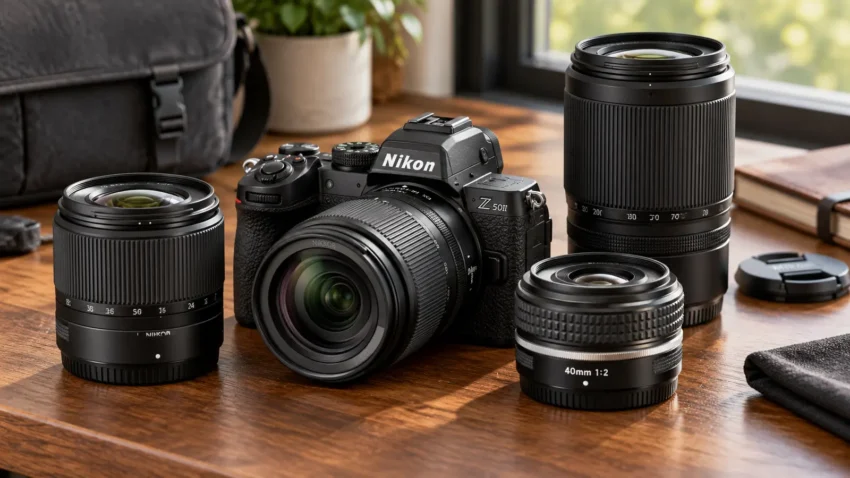
The best lens for the Nikon Z50II depends less on headline specifications and more on what you actually photograph. A compact zoom makes the camera easy to carry, a bright prime improves portraits and low-light images, while a stabilized telephoto lens opens the door to wildlife and sports.
For most owners, our top upgrade is the NIKKOR Z DX 16-50mm f/2.8 VR. It keeps the useful 24-75mm-equivalent range of a standard zoom but adds a constant f/2.8 aperture, stabilization and stronger creative control. Travelers who want one lens instead should consider the NIKKOR Z DX 18-140mm f/3.5-6.3 VR.
This guide covers seven native Nikon Z-mount lenses that were available to US buyers when checked on October 15, 2026. Availability and seller pricing can change, so the buttons below open the current Amazon.com results rather than promising a fixed price.
Affiliate disclosure: As an Amazon Associate, ElectroPro earns from qualifying purchases. This does not affect the price you pay or our editorial recommendations.
Testing note: This is a researched buying guide based on manufacturer specifications, compatibility information and published market availability. ElectroPro did not perform original laboratory testing on every lens.
The best Nikon Z50II lenses: quick picks
NIKKOR Z DX 16-50mm f/2.8 VR
NIKKOR Z DX 16-50mm f/3.5-6.3 VR
NIKKOR Z DX 18-140mm f/3.5-6.3 VR
NIKKOR Z DX 24mm f/1.7
NIKKOR Z 40mm f/2
NIKKOR Z DX 12-28mm f/3.5-5.6 PZ VR
NIKKOR Z DX 50-250mm f/4.5-6.3 VR
What lenses work with the Nikon Z50II?
The Nikon Z50II uses Nikon’s Z mount and an APS-C-size DX sensor. Native NIKKOR Z DX lenses are designed for that sensor, while full-frame NIKKOR Z lenses also mount and work normally. Because of the DX crop, multiply the printed focal length by 1.5 to understand the approximate full-frame-equivalent field of view. A 40mm lens, for example, frames like a 60mm lens on a full-frame camera.
The Z50II does not provide in-body image stabilization, so optical VR in the lens is especially useful for handheld video, telephoto photography and still subjects in lower light. A fast aperture can help freeze people or animals, but it does not replace VR in every situation. Older Nikon F-mount lenses require the optional FTZ or FTZ II adapter, and compatibility can vary, so this guide focuses on simpler native Z-mount choices.
If you are still deciding which camera type suits you, see our complete photo camera buyer’s guide.
Nikon Z50II lens comparison
| Lens | Best for | Equivalent view | Max aperture | VR | Approx. weight | Main limitation |
|---|---|---|---|---|---|---|
| Z DX 16-50mm f/2.8 VR | Everyday premium zoom | 24-75mm | f/2.8 constant | Yes | 330g | Premium price |
| Z DX 16-50mm f/3.5-6.3 VR | Smallest everyday kit | 24-75mm | f/3.5-6.3 | Yes | 135g | Slow at 50mm |
| Z DX 18-140mm f/3.5-6.3 VR | Travel | 27-210mm | f/3.5-6.3 | Yes | 315g | Not very wide |
| Z DX 24mm f/1.7 | Street and low light | 36mm | f/1.7 | No | 135g | No zoom |
| Z 40mm f/2 | Portraits and details | 60mm | f/2 | No | 170g | Tight indoors |
| Z DX 12-28mm PZ VR | Vlogging and interiors | 18-42mm | f/3.5-5.6 | Yes | 205g | Limited telephoto reach |
| Z DX 50-250mm VR | Wildlife and sports | 75-375mm | f/4.5-6.3 | Yes | 405g | Needs good light |
1. NIKKOR Z DX 16-50mm f/2.8 VR: best overall upgrade
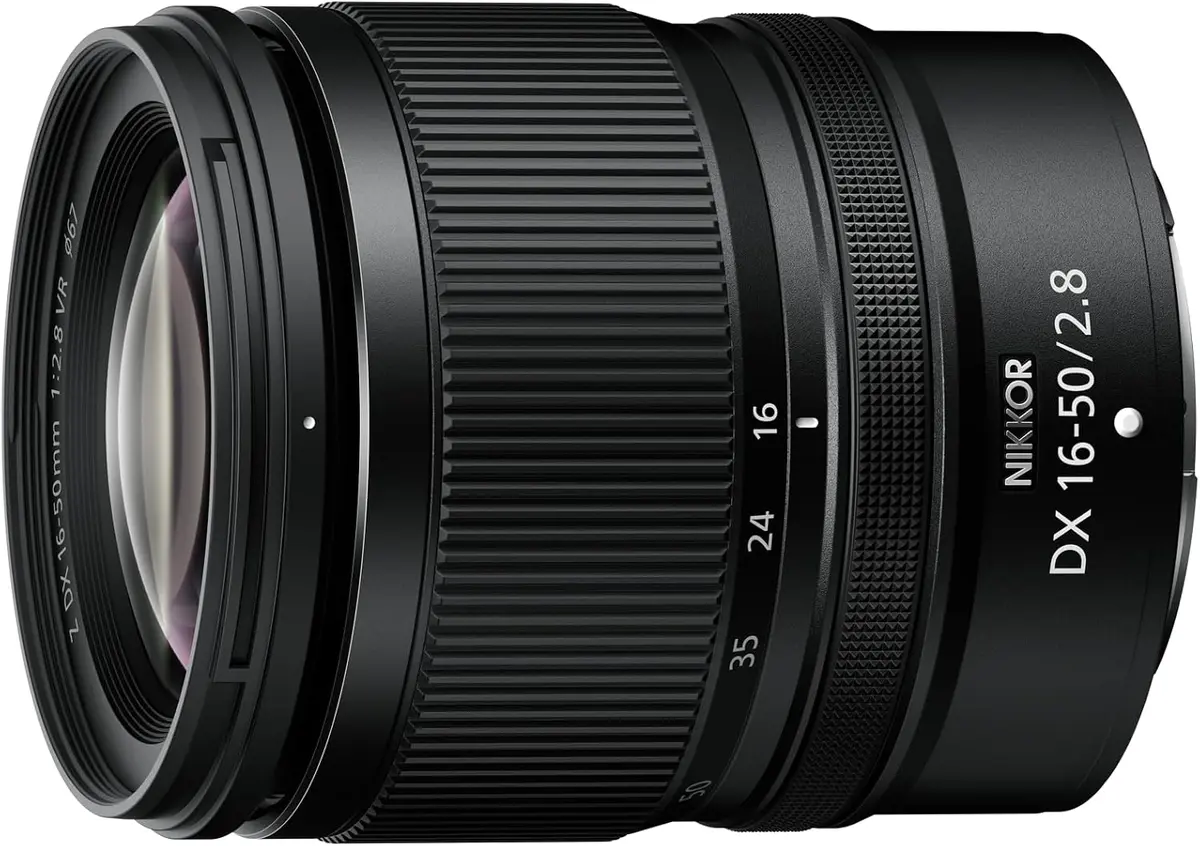
The constant-aperture 16-50mm f/2.8 VR is the most complete normal zoom for a Z50II owner who wants better low-light performance without giving up flexibility. Its 24-75mm-equivalent view covers landscapes, everyday scenes, portraits and video, while f/2.8 remains available throughout the zoom range.
Compared with the collapsible kit lens, it is larger, heavier and considerably more expensive. In return, it admits more light at the long end, offers better control over background blur and includes optical stabilization. Nikon designed it as a natural premium partner for cameras such as the Z50II, yet its 330g weight is still practical for daily use.
Buy it if: you want one high-quality everyday zoom and regularly shoot indoors, people or video.
Skip it if: pocketable size and the lowest price matter more than a constant aperture.
2. NIKKOR Z DX 16-50mm f/3.5-6.3 VR: best compact and budget lens
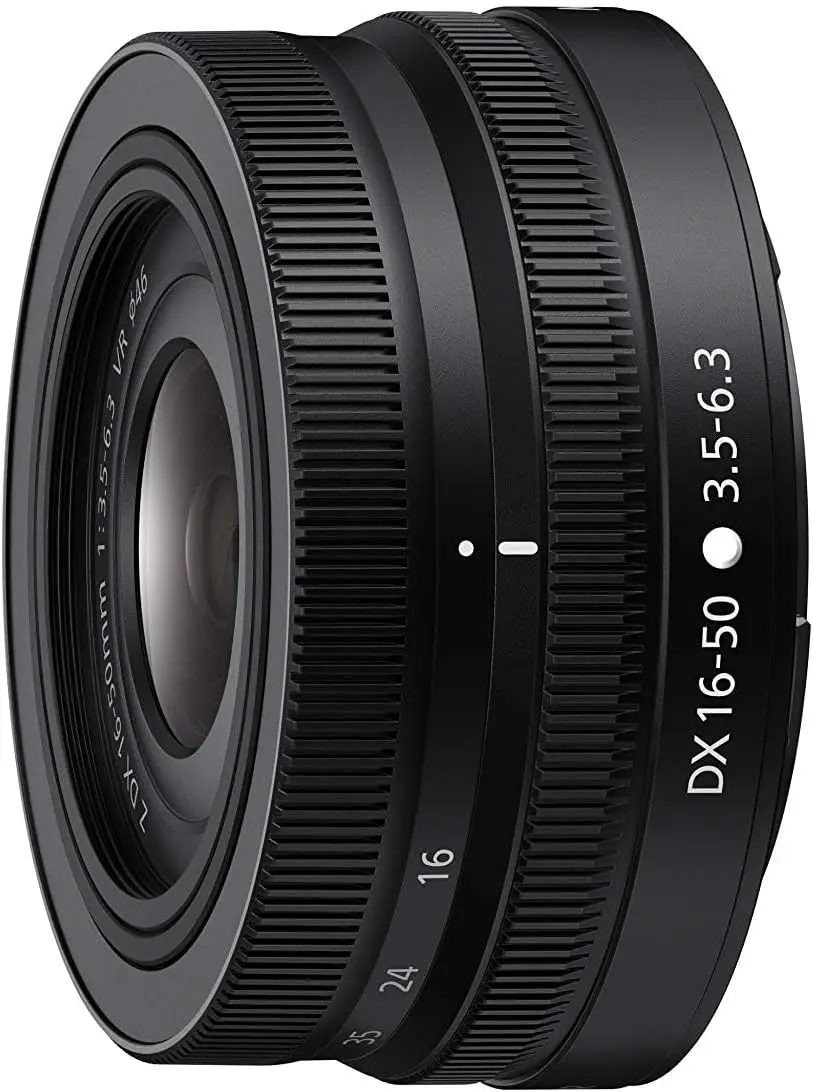
If your Z50II came with this lens, do not dismiss it simply because it is a kit zoom. At about 135g, it keeps the camera remarkably small, covers a genuinely useful 24-75mm-equivalent range and includes VR. It is a strong walk-around choice for daylight travel, family photos and casual video.
The trade-off is the variable aperture. At 50mm, the maximum aperture drops to f/6.3, so higher ISO settings or slower shutter speeds may be necessary indoors. It also creates less background separation than the f/2.8 zoom or either prime in this guide. Still, no other option here balances size, range and price as well.
Buy it if: you want the lightest practical Z50II setup.
Skip it if: you already own it and need a meaningful low-light upgrade.
3. NIKKOR Z DX 18-140mm f/3.5-6.3 VR: best travel zoom
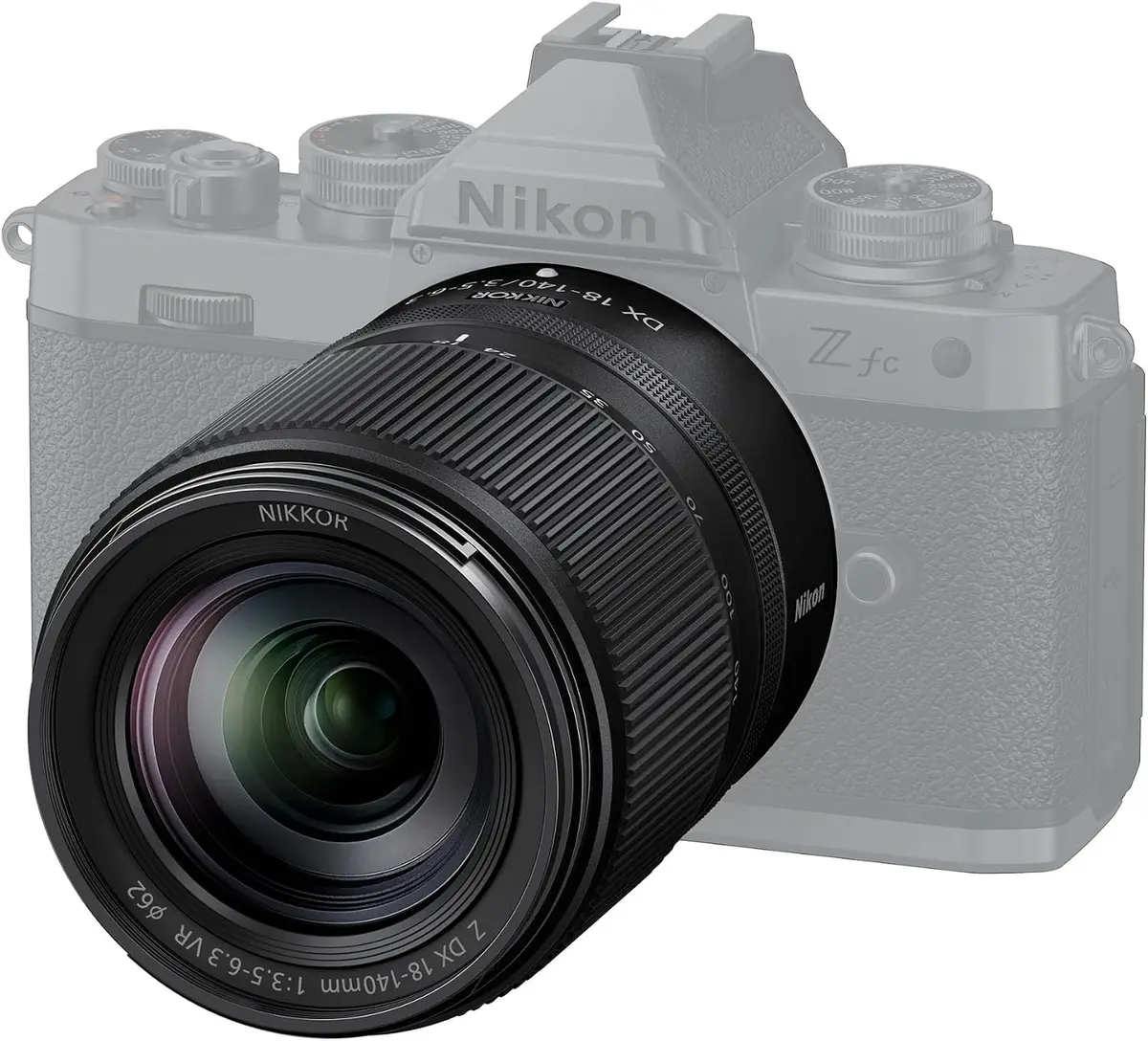
The 18-140mm is the lens to choose when changing lenses would be inconvenient. Its 27-210mm-equivalent range stretches from a moderately wide view to serious telephoto reach, making it useful for city breaks, landscapes, portraits, details and distant subjects. At roughly 315g, it provides that flexibility without turning the Z50II into an oversized kit.
Optical VR helps with static subjects at slower shutter speeds, and the broad zoom range reduces the chance of exposing the sensor to dust while traveling. The main compromise is at the wide end: 27mm equivalent is less expansive than the kit zoom’s 24mm view and far narrower than the 12-28mm. Its f/6.3 telephoto aperture also favors daylight.
Buy it if: you want to travel with one lens.
Skip it if: you prioritize low-light shooting or ultra-wide landscapes.
4. NIKKOR Z DX 24mm f/1.7: best for street photography and low light
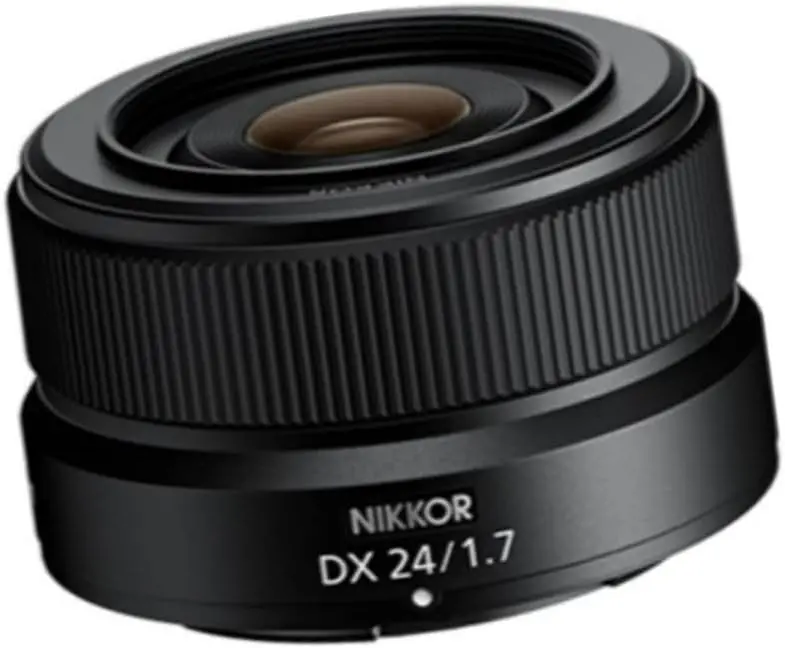
On the Z50II, this compact prime produces a natural 36mm-equivalent view. That is wide enough to show context but not so wide that people near the edge look heavily distorted. It suits street photography, travel, environmental portraits, food and everyday video.
The f/1.7 aperture gathers much more light than the standard kit zoom and can create a softer background at close distances. At approximately 135g, it also preserves the camera’s biggest strength: portability. There is no optical VR, but the bright aperture helps maintain faster shutter speeds when subjects move.
Buy it if: you want a small, bright lens with a natural perspective.
Skip it if: you prefer the convenience of a zoom or need optical stabilization for handheld video.
5. NIKKOR Z 40mm f/2: best portrait lens
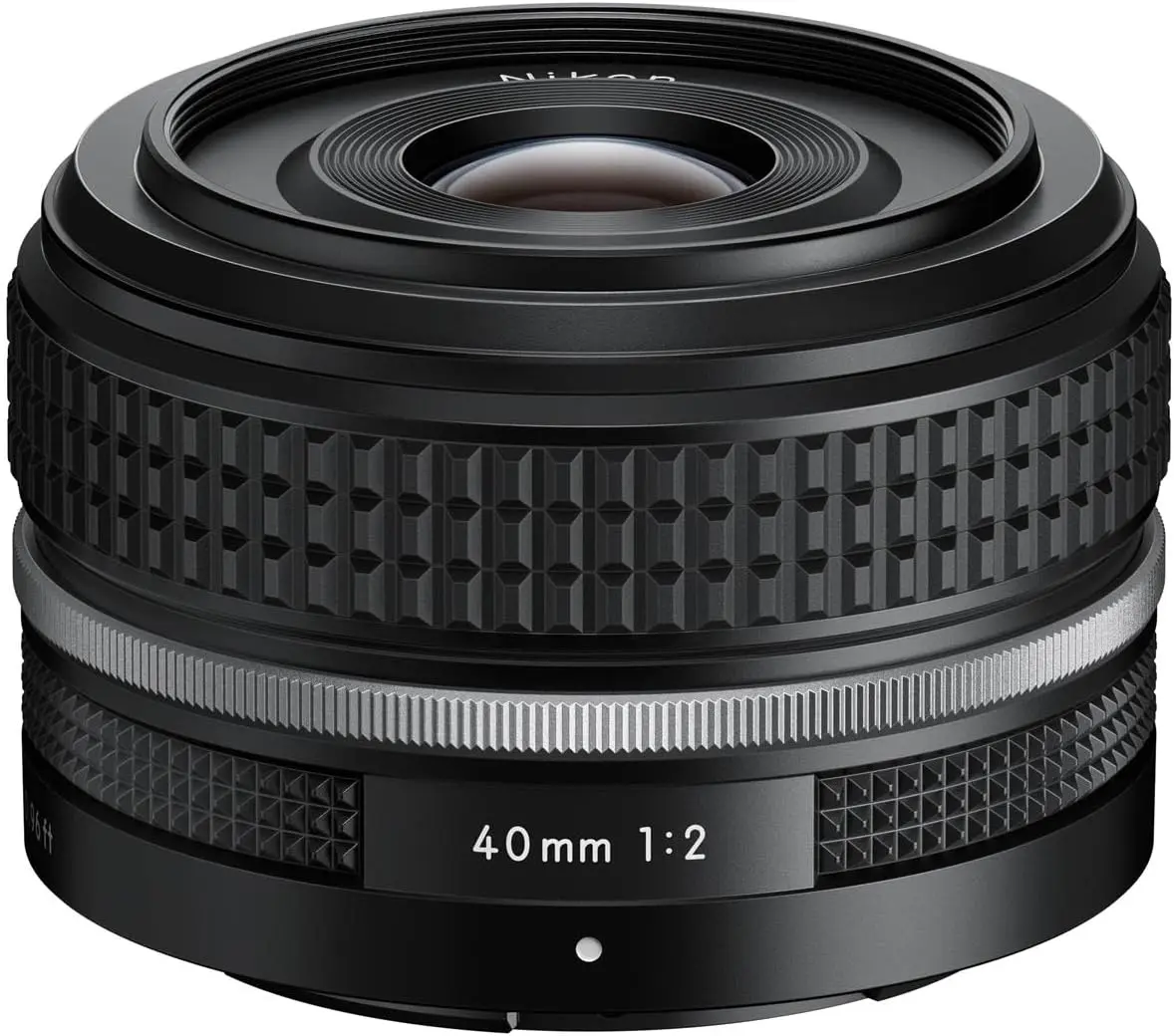
Although it is a full-frame Z lens, the 40mm f/2 works very well on the DX-format Z50II. The crop produces a 60mm-equivalent view, a flattering perspective for head-and-shoulder portraits, candid people photography and product details. The bright f/2 aperture gives stronger subject separation than either variable-aperture zoom.
It is compact, light and can remain useful if you later move to a full-frame Nikon Z body. The 60mm-equivalent framing can feel tight in small rooms, however, and there is no VR. For wider lifestyle images, the 24mm f/1.7 is easier to use.
Buy it if: portraits, detail shots and background blur are priorities.
Skip it if: you mainly film yourself at arm’s length or work in confined spaces.
6. NIKKOR Z DX 12-28mm f/3.5-5.6 PZ VR: best for vlogging and ultra-wide shots
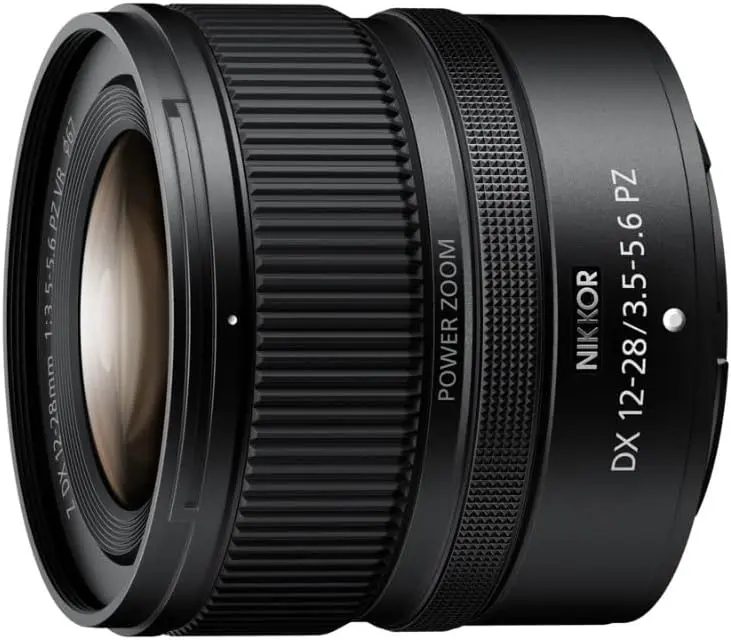
This lens covers an 18-42mm-equivalent field of view, making it the strongest choice here for handheld vlogging, interiors, architecture and broad landscapes. The power-zoom mechanism enables smoother, more repeatable zoom movements than a conventional manual zoom, while its internal zoom design helps maintain balance on a gimbal.
VR is valuable because the Z50II lacks sensor-shift stabilization, and the low 205g weight suits creator rigs. The maximum aperture is modest, especially toward 28mm, so dim interiors may still require additional light or higher ISO. It is a specialized complement to a standard or telephoto lens rather than the only lens most photographers need.
Buy it if: you vlog, film interiors or regularly need a genuinely wide view.
Skip it if: portraits and distant subjects are your main focus.
7. NIKKOR Z DX 50-250mm f/4.5-6.3 VR: best affordable telephoto
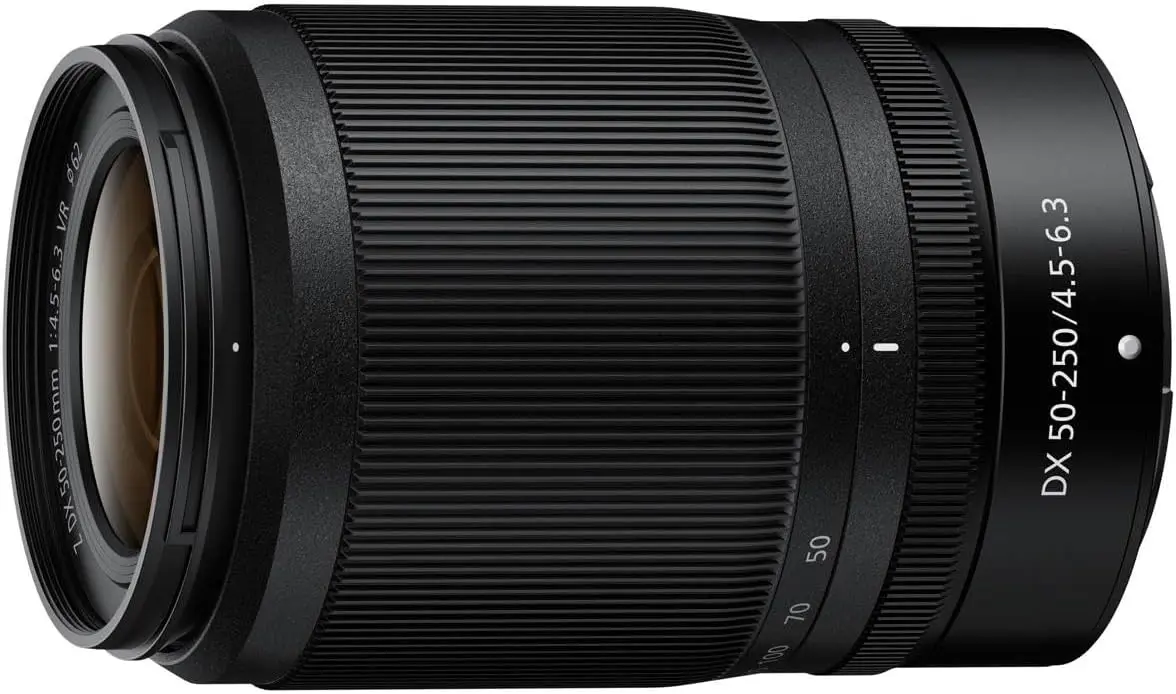
The 50-250mm gives the Z50II a 75-375mm-equivalent reach suitable for wildlife, outdoor sports, aircraft, stage events and compressed landscapes. It pairs logically with either 16-50mm zoom: one lens handles general photography, while this one takes over when subjects are farther away.
Nikon rates the lens VR system at up to five stops under its test conditions, which helps reduce camera shake when photographing static subjects. Stabilization cannot freeze a moving bird or athlete, though, and the f/6.3 aperture at the long end performs best in good light. Its retractable design keeps the lens more manageable between shoots.
Buy it if: you need reach without the price and weight of professional telephoto glass.
Skip it if: you mainly shoot fast action after sunset or indoors.
How to choose a lens for the Nikon Z50II
Choose the focal range before chasing specifications
Start with the scenes you cannot capture using your current lens. If everything looks too distant, choose the 50-250mm. If a room or selfie never fits in the frame, choose the 12-28mm. If you dislike changing lenses while traveling, the 18-140mm is the practical answer. Better specifications cannot compensate for the wrong field of view.
Understand the 1.5x crop
The focal length printed on a lens never changes, but its framing does depend on sensor size. On the Z50II, 24mm looks approximately like 36mm on full frame, 40mm looks like 60mm, and 250mm looks like 375mm. The crop is helpful for distant subjects but makes very wide framing harder, which is why the 12-28mm starts at 12mm.
Fast aperture or vibration reduction?
A wide maximum aperture such as f/1.7 or f/2 helps with moving subjects, lower light and shallow depth of field. VR reduces blur caused by your hands, so it is effective for static scenes and steadier handheld video. For wildlife in motion, neither technology replaces an appropriately fast shutter speed.
Prime lens or zoom?
Zooms let you change framing quickly and are more convenient for travel or events. Primes have one focal length but usually offer a brighter aperture at a lower weight and price. A sensible two-lens setup is often one compact zoom plus one prime selected for a specific purpose.
Our recommended Nikon Z50II lens kits
Frequently asked questions
What is the best all-around lens for the Nikon Z50II?
The NIKKOR Z DX 16-50mm f/2.8 VR is the best all-around premium choice because it combines a useful standard range, constant f/2.8 aperture and stabilization. If range matters more than low-light performance, choose the 18-140mm VR instead.
Is the Nikon Z50II kit lens good enough?
Yes. The 16-50mm f/3.5-6.3 VR is sharp enough for general photography, extremely compact and stabilized. Upgrade only when you can identify a limitation such as insufficient reach, a field of view that is not wide enough, or weak low-light performance.
Can the Nikon Z50II use full-frame Z lenses?
Yes. Full-frame NIKKOR Z lenses mount directly and use the central portion of their image circle. Apply the 1.5x crop when comparing the resulting field of view. Full-frame lenses may be larger or more expensive than comparable DX options.
Does the Nikon Z50II have image stabilization?
The Z50II does not have in-body image stabilization. Lenses marked VR provide optical vibration reduction, which is why VR matters for slow shutter speeds, longer focal lengths and handheld video.
Which Nikon Z50II lens is best for portraits?
The NIKKOR Z 40mm f/2 is our best-value portrait recommendation. On the Z50II it provides a 60mm-equivalent view and a bright f/2 aperture. For portraits that include more of the environment, the 24mm f/1.7 is the better fit.
Which lens is best for Nikon Z50II video?
The 12-28mm PZ VR is the best specialized video option for vlogging and wide scenes because it combines power zoom, stabilization and low weight. The 16-50mm f/2.8 VR is more versatile when low-light performance and subject separation matter.
Final verdict
Buy for a specific need rather than replacing the kit lens automatically. The NIKKOR Z DX 16-50mm f/2.8 VR is our strongest overall upgrade, the 18-140mm VR is the easiest one-lens travel solution, and the 40mm f/2 adds portrait capability without a large investment. Owners who already have the compact 16-50mm kit zoom can build a more capable system simply by adding the one lens their current photography is missing.
Availability note: All seven models had current US-market manufacturer pages and Amazon.com listing or indexed availability signals when checked on October 15, 2026. Stock, seller and price can change. Confirm that the product page identifies the exact lens model before ordering.
Sources and update policy
Core specifications and compatibility were checked against Nikon USA product information. Key references include Nikon’s pages for the Z50II, 18-140mm VR and 50-250mm VR. ElectroPro periodically reviews availability, specifications and recommendations; retailer inventory may change between updates.