

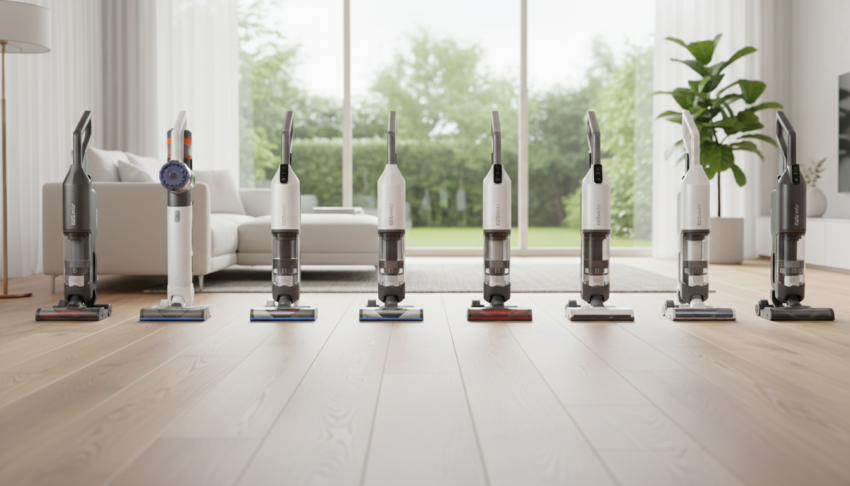

Keeping hard floors spotless requires more than a traditional mop and bucket. Modern floor cleaners combine powerful scrubbing action with convenient cordless designs to tackle dirt, stains, and debris across hardwood, tile, and laminate surfaces. These innovative machines transform floor cleaning from a time-consuming chore into an efficient task.
Our comprehensive testing evaluated the top hard floor cleaners available today. We examined cleaning performance on tough messes like coffee stains, dried mud, and pet hair. Each model underwent rigorous evaluation for water tank capacity, battery life, and ease of use.
This guide presents detailed reviews of eight exceptional floor cleaners. You’ll find feature comparisons, honest pros and cons, and clear recommendations to match your specific cleaning needs.
Our Editor’s Choice Winner
The Dyson WashG1 delivers exceptional cleaning power with innovative roller technology. Its dual water tank system and specialized cleaning solution remove stubborn stains while protecting your floors. Perfect for households with pets or high foot traffic.
Quick Comparison of the Best Hard Floor Cleaners
This comparison table highlights the essential specifications for our top-rated floor cleaners. Review the key features to identify which model aligns with your cleaning requirements and budget.
| Model | Rating | Water Tank | Runtime | Weight | Price Range | Action |
| Dyson WashG1 | 4.8/5 | 1.0L Clean / 0.8L Dirty | 35 minutes | 10.5 lbs | $$$ | View Deal |
| Bissell CrossWave HydroSteam | 4.6/5 | 0.82L Clean / 0.62L Dirty | 30 minutes | 11.2 lbs | 250$ – 300$ | View Deal |
| Tineco Floor One S7 Pro | 4.7/5 | 0.85L Clean / 0.72L Dirty | 40 minutes | 9.9 lbs | 350$ – 400$ | View Deal |
| Shark HydroVac XL | 4.5/5 | 0.85L Clean / 0.75L Dirty | 25 minutes | 11.8 lbs | 299$ | View Deal |
| Roborock Dyad Pro | 4.6/5 | 0.9L Clean / 0.72L Dirty | 43 minutes | 10.1 lbs | $$$ | View Deal |
| Bissell CrossWave Cordless Max | 4.4/5 | 0.82L Clean / 0.62L Dirty | 30 minutes | 11.5 lbs | $$ | View Deal |
| Tineco Floor One S5 | 4.5/5 | 0.8L Clean / 0.72L Dirty | 35 minutes | 9.7 lbs | 349$ | View Deal |
| Hoover FloorMate Deluxe | 4.2/5 | 1.5L Clean / 1.5L Dirty | Corded | 14 lbs | 150$ | View Deal |
Each floor cleaner excels in specific scenarios. The Dyson WashG1 leads in overall cleaning performance and innovative design. Budget-conscious shoppers appreciate the Hoover FloorMate Deluxe for unlimited runtime. Homes with large floor areas benefit from the extended battery life of the Roborock Dyad Pro.
Top-Rated Hard Floor Cleaners: Detailed Reviews
Our testing process evaluated each floor cleaner across multiple performance categories. We assessed cleaning effectiveness on various stains, examined water tank design and capacity, and measured battery performance during extended cleaning sessions.

Dyson WashG1 – Editor’s Choice for Premium Performance

The Dyson WashG1 represents the pinnacle of hard floor cleaning technology. This cordless floor cleaner features dual counter-rotating rollers that provide consistent edge-to-edge cleaning performance. The innovative design separates debris extraction from floor washing for superior results.
Our testing revealed exceptional performance on dried mud, coffee stains, and pet mess scenarios. The dedicated cleaning solution works synergistically with the roller design to lift embedded dirt without leaving residue. The 1.0-liter clean water tank covers approximately 2,900 square feet before requiring refill.
The dirty water tank features a self-cleaning mode that flushes the system after each use. This automated maintenance reduces manual cleaning time significantly. The display shows real-time water levels and battery status for informed cleaning sessions.
Advantages
- Exceptional cleaning power removes stubborn stains
- Dual roller system covers full floor width
- Self-cleaning mode simplifies maintenance
- Large water tank capacity for extended cleaning
- Separate tanks prevent dirty water recirculation
- Effective edge cleaning performance
Limitations
- Premium pricing compared to alternatives
- Proprietary cleaning solution required
- Heavier than some cordless models
- 35-minute runtime limits large homes
Technical Specifications
| Clean Water Tank Capacity | 1.0 liter |
| Dirty Water Tank Capacity | 0.8 liter |
| Battery Runtime | 35 minutes |
| Charging Time | 4.5 hours |
| Weight | 10.5 pounds |
| Roller Width | 10.5 inches |
| Floor Types | Hardwood, tile, laminate, sealed floors |
| Warranty | 2 years |
The Dyson WashG1 excels in homes with multiple hard floor types and frequent spills. Pet owners appreciate the powerful debris extraction and odor-neutralizing cleaning solution. The investment pays dividends through reduced cleaning time and superior floor appearance.
Bissell CrossWave HydroSteam – Best for Deep Cleaning

The Bissell CrossWave HydroSteam introduces steam technology to the hard floor cleaner category. This wet dry vacuum combines traditional roller cleaning with on-demand steam for sanitization. The steam mode activates with a trigger for targeted deep cleaning of stubborn stains.
Testing demonstrated superior performance on grease and sticky residue. The steam penetrates tile grout lines effectively, lifting discoloration that standard cleaning misses. The dual-action brush roller works simultaneously with steam for comprehensive dirt removal.
The clean water tank holds Bissell’s specialized cleaning solution mixed with water. The dirty water tank features a separate debris screen that captures hair and larger particles. This design prevents clogs and maintains consistent suction throughout cleaning sessions.
Advantages
- Steam function sanitizes without harsh chemicals
- Excellent grout cleaning performance
- Dual-tank system keeps clean and dirty water separate
- Effective on grease and sticky messes
- Multi-surface capability includes area rugs
- Competitive mid-range pricing
Limitations
- Steam reduces battery runtime
- Heavier than non-steam models
- Requires cool-down before storage
- More complex maintenance procedures
Technical Specifications
| Clean Water Tank Capacity | 0.82 liter |
| Dirty Water Tank Capacity | 0.62 liter |
| Battery Runtime | 30 minutes (20 with steam) |
| Charging Time | 4 hours |
| Weight | 11.2 pounds |
| Steam Heat-Up Time | 30 seconds |
| Floor Types | Hardwood, tile, laminate, sealed floors, area rugs |
| Warranty | 3 years |
The Bissell CrossWave HydroSteam suits households prioritizing deep sanitization. Families with young children benefit from chemical-free steam cleaning. The model handles daily maintenance cleaning and periodic deep cleaning sessions equally well.
Tineco Floor One S7 Pro – Smart Cleaning Technology

The Tineco Floor One S7 Pro integrates intelligent sensors that automatically adjust water flow and suction power based on detected dirt levels. This smart floor cleaner distinguishes between light dust and heavy debris, optimizing cleaning mode in real time.
The centrifugal air drying technology stands out among tested models. After cleaning, the system continues air circulation through the roller for three minutes. This prevents odor development and extends roller lifespan significantly compared to models without air drying features.
Our testing revealed impressive edge cleaning performance. The roller extends close to baseboards, minimizing the need for manual corner cleaning. The LED display provides detailed information about battery percentage, water levels, and cleaning performance metrics.
Advantages
- Automatic dirt detection adjusts cleaning power
- Air drying system prevents odor buildup
- Extended 40-minute battery runtime
- Detailed LED display shows all status info
- Lightweight design at 9.9 pounds
- Excellent edge cleaning capability
Limitations
- Higher price point for smart features
- Learning curve for display features
- Proprietary cleaning solution recommended
- Smaller dirty water tank than some models
Technical Specifications
| Clean Water Tank Capacity | 0.85 liter |
| Dirty Water Tank Capacity | 0.72 liter |
| Battery Runtime | 40 minutes |
| Charging Time | 4 hours |
| Weight | 9.9 pounds |
| Air Drying Time | 3 minutes |
| Display Type | LED with real-time metrics |
| Floor Types | All sealed hard floors |
| Warranty | 2 years |
Tech-savvy homeowners appreciate the Tineco Floor One S7 Pro’s data-driven approach to cleaning. The automatic mode adjustment saves effort while delivering thorough results. Homes with varying floor types benefit from the intelligent surface detection.
Shark HydroVac XL – Powerful Wet Dry Performance

The Shark HydroVac XL combines wet and dry cleaning capabilities in a single cordless unit. This versatile floor cleaner transitions seamlessly between mopping mode for general cleaning and vacuum mode for debris pickup. The dual functionality eliminates the need for separate cleaning tools.
Testing revealed exceptional performance on pet hair and larger debris. The powerful suction captures dirt that other models push around. The antimicrobial brush roll resists odor-causing bacteria, maintaining freshness between deep cleaning cycles.
The XL designation reflects generous tank capacity. The 0.85-liter clean water tank and 0.75-liter dirty water tank accommodate larger cleaning areas without interruption. The tanks remove easily for filling and emptying at standard sinks.
Advantages
- Powerful suction handles pet hair effectively
- True wet-dry functionality in one device
- Large tank capacity reduces refill frequency
- Antimicrobial brush roll fights odors
- Affordable pricing for features offered
- Easy-empty dirty water tank design
Limitations
- Shorter 25-minute runtime
- Heavier at 11.8 pounds
- Louder operation than premium models
- Basic display lacks detailed metrics
Technical Specifications
| Clean Water Tank Capacity | 0.85 liter |
| Dirty Water Tank Capacity | 0.75 liter |
| Battery Runtime | 25 minutes |
| Charging Time | 3.5 hours |
| Weight | 11.8 pounds |
| Brush Roll Type | Antimicrobial soft roller |
| Cleaning Modes | Wet, dry, and combination |
| Floor Types | Hardwood, tile, laminate, vinyl |
| Warranty | 5 years |
Pet owners find the Shark HydroVac XL particularly valuable for managing shedding seasons and muddy paw prints. The wet dry vacuum functionality adapts to unexpected spills and routine maintenance equally well. The five-year warranty provides long-term peace of mind.
Roborock Dyad Pro – Extended Runtime Leader

The Roborock Dyad Pro delivers industry-leading 43-minute battery runtime. This extended operation time enables cleaning of large homes or multiple floors without recharging interruptions. The high-capacity battery maintains consistent power output throughout the entire cleaning cycle.
Our testing confirmed reliable performance across various floor types. The adaptive suction automatically increases when detecting concentrated dirt areas. The dual roller system applies even pressure across the cleaning path for uniform results.
The innovative dirty water tank incorporates a self-cleaning function. After use, the system circulates clean water through internal components to flush residue. This automated maintenance preserves suction performance and prevents clogs over time.
Advantages
- Exceptional 43-minute runtime for large homes
- Consistent power throughout battery cycle
- Self-cleaning system reduces maintenance
- Adaptive suction adjusts to dirt levels
- Lightweight 10.1-pound design
- Premium build quality and materials
Limitations
- Premium pricing tier
- Longer charging time required
- Limited third-party solution compatibility
- Availability varies by region
Technical Specifications
| Clean Water Tank Capacity | 0.9 liter |
| Dirty Water Tank Capacity | 0.72 liter |
| Battery Runtime | 43 minutes |
| Charging Time | 5 hours |
| Weight | 10.1 pounds |
| Roller Speed | Variable (200-450 RPM) |
| Self-Cleaning Duration | 40 seconds |
| Floor Types | All sealed hard surfaces |
| Warranty | 2 years |
Large homes spanning 3,000+ square feet benefit most from the Roborock Dyad Pro. Multi-story residences appreciate completing all floors in a single charge. The extended runtime also accommodates commercial applications in small offices or retail spaces.
Bissell CrossWave Cordless Max – Best Budget Cordless

The Bissell CrossWave Cordless Max delivers excellent value in the cordless floor cleaner segment. This model balances essential features with affordable pricing. The multi-surface capability handles both hard floors and area rugs without changing settings.
Testing demonstrated solid performance on common household messes. Coffee spills, tracked-in dirt, and light pet hair cleaned efficiently. The brush roll features microfiber and nylon bristles that work together to scrub floors while absorbing liquid.
The two-tank system separates clean water with cleaning solution from dirty water extraction. The tanks snap into place securely and remove for easy cleaning. The included storage tray holds the cleaner and provides a drying area for the brush roll.
Advantages
- Affordable cordless floor cleaning option
- Multi-surface works on rugs and hard floors
- Simple operation with minimal learning curve
- Solid 30-minute battery performance
- Storage tray included in package
- Wide availability of cleaning solutions
Limitations
- Less powerful than premium models
- Smaller tank capacity requires frequent refills
- Basic features without smart functions
- Heavier than newer cordless designs
Technical Specifications
| Clean Water Tank Capacity | 0.82 liter |
| Dirty Water Tank Capacity | 0.62 liter |
| Battery Runtime | 30 minutes |
| Charging Time | 4 hours |
| Weight | 11.5 pounds |
| Brush Roll Type | Multi-surface microfiber/nylon |
| Floor Types | Hard floors, sealed wood, area rugs |
| Warranty | 3 years |
Budget-conscious households appreciate the CrossWave Cordless Max for introducing cordless cleaning convenience without premium pricing. The multi-surface capability adds versatility for homes with mixed flooring. First-time floor cleaner buyers find the straightforward operation appealing.
Tineco Floor One S5 – Compact Smart Cleaning

The Tineco Floor One S5 packages smart cleaning technology into a lightweight 9.7-pound frame. This compact floor cleaner maneuvers easily around furniture and into tight spaces. The intelligent sensor system detects dirt levels and adjusts water flow automatically.
Testing revealed efficient cleaning on everyday messes while conserving battery and water resources. The smart sensor prevents over-wetting by dispensing appropriate water amounts based on floor condition. The LED ring on the display changes color to indicate floor cleanliness in real time.
The air drying system runs for two minutes after cleaning to dry the brush roller. This feature prevents mildew growth and maintains roller performance. The self-cleaning mode flushes the internal water path to remove residual debris.
Advantages
- Lightweight 9.7-pound design for easy handling
- Smart sensors optimize water and battery use
- Color-coded display shows cleaning status
- Air drying prevents roller odors
- Competitive pricing for smart features
- Excellent maneuverability in tight spaces
Limitations
- Smaller tank capacity than larger models
- 35-minute runtime adequate but not leading
- Less powerful on deeply embedded stains
- Shorter roller width covers less area
Technical Specifications
| Clean Water Tank Capacity | 0.8 liter |
| Dirty Water Tank Capacity | 0.72 liter |
| Battery Runtime | 35 minutes |
| Charging Time | 4 hours |
| Weight | 9.7 pounds |
| Sensor Type | Intelligent dirt detection |
| Air Drying Time | 2 minutes |
| Floor Types | All sealed hard floors |
| Warranty | 2 years |
Apartment dwellers and smaller homes benefit from the Tineco Floor One S5’s compact footprint. Users with limited storage space appreciate the smaller dimensions. The lightweight design suits individuals who prefer easier lifting and carrying during cleaning sessions.
Hoover FloorMate Deluxe – Best Corded Value

The Hoover FloorMate Deluxe represents the best value in corded hard floor cleaners. Unlimited runtime from constant power eliminates battery anxiety during large cleaning projects. The corded design delivers consistent suction and brush speed throughout operation.
Our testing confirmed reliable performance across extended cleaning sessions. The generous 1.5-liter tanks accommodate whole-house cleaning without refilling. The dual tank system maintains separation between clean and dirty water for hygienic operation.
The SpinScrub brush system features counter-rotating brushes that scrub floors from multiple angles. This mechanical action loosens embedded dirt effectively. Separate clean and dry modes allow customized cleaning approaches for different floor conditions.
Advantages
- Extremely affordable entry price point
- Unlimited runtime from corded power
- Largest tank capacity at 1.5 liters each
- Consistent power without battery fade
- Proven reliability over many years
- Wide availability of replacement parts
Limitations
- Cord limits mobility and convenience
- Heavier at 14 pounds
- Older design lacks modern features
- Requires outlet access throughout cleaning
- No smart sensors or automation
Technical Specifications
| Clean Water Tank Capacity | 1.5 liters |
| Dirty Water Tank Capacity | 1.5 liters |
| Power Type | Corded electric |
| Cord Length | 22 feet |
| Weight | 14 pounds |
| Brush System | SpinScrub counter-rotating |
| Cleaning Modes | Wash and dry |
| Floor Types | Tile, vinyl, marble, sealed hardwood |
| Warranty | 2 years |
Budget-focused buyers seeking basic floor cleaning capability find excellent value in the Hoover FloorMate Deluxe. Large homes benefit from unlimited runtime and generous tank capacity. Users comfortable with corded tools appreciate the lower price and proven performance.
How to Choose the Right Hard Floor Cleaner
Selecting the ideal floor cleaner depends on your specific home environment and cleaning priorities. Consider these essential factors to identify the model that best matches your requirements.

Understanding Water Tank Systems
Water tank design significantly impacts cleaning efficiency and convenience. Modern floor cleaners utilize dual-tank systems that separate clean water mixed with cleaning solution from extracted dirty water. This separation prevents contamination and ensures consistent cleaning performance.
Clean water tank capacity determines the coverage area before refilling. Larger tanks ranging from 0.9 to 1.5 liters accommodate more square footage. Smaller apartments function well with 0.6 to 0.8-liter capacities. The dirty water tank should match or slightly exceed clean tank size to prevent overflow during cleaning.
Tank accessibility matters for daily use. Top-mounted tanks remove more easily than bottom-positioned models. Transparent tank walls allow visual monitoring of water levels. Wide-mouth openings simplify filling at standard sinks without funnels.
Cordless vs Corded Performance
Cordless floor cleaners provide unrestricted mobility without outlet dependence. Battery-powered models suit homes with multiple rooms and levels. Runtime varies from 25 to 43 minutes depending on model and cleaning mode intensity. Charging typically requires 3.5 to 5 hours between uses.
Corded models deliver unlimited runtime with consistent power. These floor cleaners excel in large homes where battery capacity might prove insufficient. Cord length becomes the limiting factor, with most models providing 20 to 25 feet of reach. Extension cords expand coverage but add complexity.
Consider your home’s square footage and layout when choosing between cordless and corded options. Homes under 2,000 square feet generally function well with cordless models. Larger residences or commercial applications may benefit from corded unlimited operation.
Cordless Advantages
Battery-powered floor cleaners eliminate cord management frustrations. These benefits make cordless models increasingly popular:
- Complete freedom of movement throughout home
- No outlet access required during cleaning
- Easier navigation around furniture and obstacles
- Reduced trip hazards from trailing cords
Corded Benefits
Traditional corded power provides distinct advantages for certain cleaning scenarios:
- Unlimited cleaning time without recharge waits
- Consistent power output throughout use
- Lower purchase price in most cases
- No battery replacement costs over time
Battery Considerations
Evaluate these battery-related factors when selecting cordless floor cleaners:
- Runtime adequacy for your home size
- Charging time between cleaning sessions
- Battery degradation over years of use
- Replacement battery availability and cost
Power Requirements
Corded models require planning around electrical infrastructure:
- Adequate outlet placement in cleaning areas
- Cord length sufficient for room coverage
- Extension cord compatibility if needed
- Storage space for cord management
Brush Roller Technology Explained
The brush roller serves as the primary cleaning mechanism in hard floor cleaners. Roller design affects cleaning performance across different floor types and stain categories. Understanding roller technology helps identify the most effective model for your floors.
Dual roller systems employ two counter-rotating brushes that scrub from opposite directions. This configuration provides more thorough agitation and debris pickup compared to single rollers. The Dyson WashG1 exemplifies this design approach with specialized rollers for washing and drying functions.
Soft rollers feature microfiber or plush materials suitable for delicate hardwood floors. These gentle rollers prevent scratching while absorbing liquid effectively. Nylon bristle combinations add scrubbing power for textured tile and grout cleaning. Multi-surface rollers incorporate both materials for versatility.
Roller maintenance requirements vary by design. Self-cleaning systems automatically flush rollers after use, reducing manual cleaning. Air drying features circulate air through rollers to prevent mildew and odors. Removable rollers enable thorough hand washing and periodic replacement.

Smart Features and Automation
Advanced floor cleaners incorporate intelligent sensors and automated systems. These features optimize cleaning performance while reducing user effort. Smart technology adds convenience but typically increases purchase price.
Dirt detection sensors analyze floor cleanliness in real time. These systems automatically adjust water flow and suction power based on detected debris levels. Light dirt triggers minimal water dispensing, while heavy soil increases both water and suction. This automation conserves resources while ensuring thorough cleaning.
LED displays provide operational feedback through intuitive interfaces. Color-coded indicators show battery status, water levels, and cleaning effectiveness. Some models feature numerical readouts with detailed performance metrics. Voice alerts announce maintenance needs or error conditions.
Automated maintenance modes simplify post-cleaning procedures. Self-cleaning functions flush internal water paths to prevent residue buildup. Air drying cycles preserve roller freshness between uses. These automated features reduce manual maintenance time significantly.
Weight and Maneuverability Factors
Floor cleaner weight directly impacts user comfort during operation. Lighter models ranging from 9.7 to 10.5 pounds reduce arm fatigue during extended cleaning sessions. Heavier units between 11 and 14 pounds provide stability but require more physical effort.
Handle design affects control and comfort. Ergonomic grips reduce hand strain during prolonged use. Adjustable handle angles accommodate different user heights. Swivel steering enables tight turns around furniture and into corners.
Floor cleaner profile determines accessibility in low-clearance areas. Low-profile cleaning heads fit under furniture with limited ground clearance. Compact designs navigate between chair legs and table bases more easily than bulkier models.
Best Floor Cleaners by Surface Type
Different flooring materials require tailored cleaning approaches. Selecting a floor cleaner optimized for your specific floor type ensures effective cleaning without damage risk.

Hardwood Floor Cleaning Considerations
Sealed hardwood floors benefit from gentle cleaning methods that prevent water penetration. Floor cleaners designed for hardwood utilize soft microfiber rollers that avoid scratching delicate finishes. Controlled water dispensing prevents over-wetting that can damage wood.
The Dyson WashG1 and Tineco Floor One S7 Pro excel on hardwood surfaces. Their precision water control and soft roller designs protect wood while removing dirt and grime. Avoid excessive water application on hardwood to prevent swelling or finish damage.
Unsealed or waxed hardwood requires different cleaning approaches. These floor types should not be cleaned with wet systems. Dry vacuuming or specialized wood floor cleaners serve these surfaces better.
Tile and Grout Deep Cleaning
Ceramic and porcelain tile withstand more aggressive cleaning than hardwood. Grout lines accumulate dirt that requires scrubbing action to remove. Floor cleaners with steam functions or stronger brush agitation tackle tile and grout effectively.
The Bissell CrossWave HydroSteam delivers exceptional tile performance through its steam cleaning mode. Steam penetrates grout pores to lift embedded discoloration. Counter-rotating brushes scrub grout lines while cleaning tile surfaces simultaneously.
Regular tile cleaning prevents grout staining that becomes difficult to remove over time. Weekly maintenance with a capable floor cleaner preserves tile appearance and reduces deep cleaning frequency.
Laminate and Vinyl Care
Laminate flooring requires minimal water exposure to prevent seam damage. Floor cleaners with precise water control suit laminate surfaces well. The protective layer on laminate resists scratching but can show streaks if excessive cleaning solution remains.
Vinyl flooring tolerates more moisture than laminate but still benefits from controlled water application. Textured vinyl captures dirt in surface patterns that require brush agitation to release. Most modern floor cleaners handle vinyl effectively across various textures.
The Shark HydroVac XL and Roborock Dyad Pro perform well on both laminate and vinyl. Their adjustable water dispensing accommodates different moisture tolerance levels across floor types.
Tackling Common Floor Cleaning Challenges
Different mess types require varied cleaning strategies. Understanding how floor cleaners handle specific challenges helps set realistic performance expectations.

Pet Hair and Dander Management
Pet hair presents unique challenges for floor cleaners. Long hair wraps around brush rollers, potentially reducing performance. Models with anti-tangle roller designs minimize hair accumulation. Strong suction extracts embedded pet dander from textured floor surfaces.
The Shark HydroVac XL demonstrates superior pet hair handling through powerful suction and specialized roller design. Regular roller cleaning maintains performance in multi-pet households. The antimicrobial roller treatment resists odor development from pet-related debris.
Daily or every-other-day cleaning prevents pet hair buildup on floors. Consistent maintenance reduces allergen levels and keeps homes cleaner for family members with sensitivities.
Sticky Spills and Dried Stains
Dried coffee, juice, and food spills require sustained cleaning action to remove. Floor cleaners with steam capability or extended contact time prove most effective on stubborn stains. Multiple passes over heavily soiled areas typically achieve better results than single attempts.
Our testing revealed that allowing cleaning solution brief dwell time before scrubbing improves stain removal. Most floor cleaners dispense solution slightly ahead of the brush roller, providing a few seconds of chemical action before mechanical scrubbing.
The Bissell CrossWave HydroSteam’s steam function excels on dried, sticky messes. Heat softens hardened residue for easier removal. For non-steam models, a second pass over challenging stains usually completes the cleaning process.
Mud and Outdoor Debris Tracking
Mud combines dirt particles with moisture that can spread during cleaning. Effective mud cleaning requires strong suction to extract the mess rather than pushing it around. Floor cleaners should demonstrate clear dirty water collection when tackling mud.
Allow mud to dry before cleaning when possible. Dried mud vacuums more easily as loose debris before wet cleaning addresses remaining residue. This two-step approach prevents mud spreading across larger floor areas.
Entry areas experience heavy mud traffic during wet weather. Position entry mats to capture most outdoor debris before it reaches main floor areas. Regular cleaning of high-traffic zones prevents tracked-in dirt from spreading throughout the home.
Grease and Cooking Residue
Kitchen floors accumulate grease splatter and cooking oil over time. These substances require degreasing cleaning solutions and adequate scrubbing action. Hot water enhances grease cutting effectiveness when paired with appropriate cleaning formulas.
Steam-equipped models like the Bissell CrossWave HydroSteam cut through kitchen grease more effectively than models relying solely on chemical action. The combination of heat, cleaning solution, and mechanical scrubbing addresses even stubborn grease buildup.
Regular kitchen floor cleaning prevents grease accumulation that becomes progressively harder to remove. Weekly deep cleaning maintains kitchen floors in optimal condition.
Floor Cleaner Maintenance Guide
Proper maintenance extends floor cleaner lifespan and preserves cleaning performance. Following manufacturer guidelines ensures reliable operation over many years of use.

Daily Cleaning Procedures
After each cleaning session, empty the dirty water tank completely. Rinse the tank with clean water to remove residual debris. Allow the tank to air dry before reinstalling to prevent odor development.
Run the self-cleaning cycle if your model includes this feature. Self-cleaning flushes internal water paths and brush rollers. This automated maintenance takes 30 to 40 seconds and significantly reduces manual cleaning requirements.
Activate air drying mode when available. This feature circulates air through the brush roller for two to three minutes after cleaning. Air drying prevents mildew growth that causes unpleasant odors.
Weekly Maintenance Tasks
Remove the brush roller weekly for thorough cleaning. Rinse the roller under running water to remove accumulated hair, debris, and residue. Some rollers are machine washable for deeper cleaning.
Inspect the roller for wear or damage. Replace worn rollers according to manufacturer recommendations, typically every 6 to 12 months depending on usage frequency. Fresh rollers maintain optimal cleaning performance.
Clean the filter system if your floor cleaner includes one. Rinse filters under water and allow complete drying before reinstallation. Replace filters per manufacturer schedule, usually every 3 to 6 months.
Monthly Deep Cleaning
Disassemble all removable components for comprehensive cleaning. Wash water tanks, rollers, and attachments with mild soap and water. Avoid harsh chemicals that might damage plastic or rubber components.
Inspect hoses and connections for clogs or buildup. Use a brush or pipe cleaner to clear any obstructions in water pathways. Clean water flow ensures consistent performance.
Check battery contacts on cordless models. Wipe contacts with a dry cloth to remove dust or oxidation. Clean contacts ensure efficient charging and maximum battery life.
Storage Best Practices
Store floor cleaners in dry locations away from temperature extremes. Avoid damp basements that promote mold growth. Dedicated storage stands keep cleaners organized and allow proper air circulation for drying.
Store cordless models on charging docks when not in use. This maintains battery readiness for impromptu cleaning needs. Avoid complete battery discharge, which can reduce long-term battery capacity.
Keep cleaning solution bottles in cool, dark locations. Direct sunlight or heat can degrade formula effectiveness over time. Follow solution expiration dates for optimal cleaning results.
Understanding Total Ownership Costs
The purchase price represents just one component of floor cleaner ownership costs. Evaluating total cost of ownership provides a more complete financial picture.

Initial Investment Considerations
Budget floor cleaners start around $150 for basic corded models. Mid-range cordless cleaners typically cost $250 to $400. Premium models with advanced features range from $450 to $700. Consider your budget against required features and expected usage frequency.
Higher upfront costs often correlate with superior performance and durability. Premium models incorporate better components that withstand heavy use over many years. Budget options serve light-use scenarios adequately but may require earlier replacement.
Watch for seasonal sales and promotions that reduce premium model pricing. Black Friday, spring cleaning season, and end-of-year clearances often feature significant discounts on floor cleaners.
Ongoing Operating Expenses
Cleaning solution represents the primary recurring expense. Proprietary formulas cost $15 to $25 per bottle, providing 10 to 15 cleaning sessions. Generic solutions work with some models but may reduce warranty coverage or cleaning effectiveness.
Replacement rollers cost $20 to $50 depending on model and technology. Budget one to two roller replacements annually for regular use. Filters require replacement every 3 to 6 months at $10 to $20 per set.
Battery replacement becomes necessary after 2 to 4 years on cordless models. Replacement batteries cost $50 to $100 depending on capacity and brand. Corded models eliminate this expense entirely.
Long-Term Value Assessment
Calculate the cost per cleaning session to compare models fairly. Divide total ownership costs by expected cleaning sessions over the product lifespan. This metric reveals true value better than purchase price alone.
Premium models with longer warranties and better build quality often deliver lower per-use costs despite higher initial pricing. Budget models requiring frequent replacement may cost more over five years of use.
Consider the time savings value of more efficient cleaning. A floor cleaner that completes tasks in half the time provides intangible value beyond monetary considerations.
Ready to Transform Your Floor Cleaning Routine?
Compare our top-rated floor cleaners and find the perfect model for your home. Each recommendation includes detailed specifications, honest pros and cons, and direct links to verified retailers. Take the first step toward cleaner floors with less effort.
Frequently Asked Questions About Hard Floor Cleaners
How often should I use a hard floor cleaner?
Cleaning frequency depends on household activity and floor traffic. High-traffic homes with pets or children benefit from every-other-day cleaning. Average households maintain clean floors with two to three sessions per week. Low-traffic areas require weekly cleaning to remove accumulated dust and light debris.
Establish a consistent cleaning schedule rather than waiting for visible dirt. Regular maintenance prevents buildup that becomes progressively harder to remove. Adjust frequency based on your specific floor conditions and cleanliness standards.
Can hard floor cleaners damage my hardwood floors?
Properly used hard floor cleaners designed for hardwood pose minimal damage risk to sealed floors. These specialized models control water application to prevent over-wetting. Soft rollers avoid scratching protective finishes. Always verify your hardwood floor is sealed before using wet cleaning methods.
Unsealed or waxed hardwood should not be cleaned with wet systems. These floor types require dry cleaning methods or specialized wood floor care products. When in doubt, test the cleaner in an inconspicuous area before proceeding with full floor cleaning.
What is the difference between a hard floor cleaner and a steam mop?
Hard floor cleaners combine vacuum suction with wet cleaning in a single pass. These machines extract dirty water into a separate tank, leaving floors cleaner and drier. Steam mops use only heat and steam without suction or cleaning solution.
Hard floor cleaners handle debris and liquid spills more effectively than steam mops. The dual-action approach removes both loose dirt and stuck-on stains simultaneously. Steam mops excel at sanitization but struggle with actual debris removal. Choose hard floor cleaners for comprehensive cleaning performance.
How long do cordless hard floor cleaners run on a single charge?
Battery runtime varies from 25 to 43 minutes depending on model and cleaning mode. Basic cleaning modes extend runtime compared to maximum power settings. The Roborock Dyad Pro leads with 43-minute operation, while budget models typically provide 25 to 30 minutes.
Most homes under 2,000 square feet clean completely within available runtime. Larger residences may require strategic cleaning scheduling or mid-session recharging. Consider your home’s square footage when selecting a cordless model to ensure adequate runtime.
Do I need to use proprietary cleaning solutions?
Manufacturer-branded cleaning solutions ensure optimal performance and typically preserve warranty coverage. These formulas are specifically designed for each model’s water delivery system and roller materials. Generic solutions may work but could affect cleaning effectiveness or void warranties.
Some models explicitly allow alternative cleaning solutions, while others require proprietary formulas. Check your user manual for guidance. When using generic solutions, ensure they are designed for hard floor cleaners rather than traditional mops to avoid excess foaming or residue.
Can hard floor cleaners work on area rugs and carpets?
Select models offer multi-surface capability for both hard floors and area rugs. The Bissell CrossWave series specifically includes this versatility. These models use different roller speeds or suction settings for carpet versus hard floor cleaning.
Hard floor specialists like the Dyson WashG1 focus exclusively on hard surfaces and should not be used on carpets. Attempting to clean carpets with hard-floor-only models can damage the machine or floor covering. Verify multi-surface capability before using on rugs or carpets.
How do I prevent odors in my floor cleaner?
Empty the dirty water tank immediately after each use to prevent bacterial growth. Rinse both tanks thoroughly with clean water and allow complete air drying before storage. Run air drying cycles when available to dry brush rollers completely.
Remove and wash the brush roller weekly to eliminate accumulated debris that causes odors. Some models feature antimicrobial roller treatments that resist bacteria. Store the cleaner in a well-ventilated area rather than enclosed closets to promote drying and prevent musty smells.
What warranty coverage should I expect?
Warranty periods range from two to five years depending on brand and model. The Shark HydroVac XL offers the longest coverage at five years. Most premium models include two-year warranties covering defects and component failures.
Extended warranties may be available for additional cost. Evaluate extended warranty value against the product’s track record and your usage intensity. Register your product promptly to activate warranty coverage and maintain proof of purchase for future claims.
Are hard floor cleaners suitable for commercial use?
Consumer hard floor cleaners are designed for residential use and may not withstand commercial cleaning demands. Heavy daily use in commercial settings accelerates wear and may void residential warranties. Commercial-grade floor cleaning equipment offers greater durability for business applications.
Small businesses with limited floor space might use residential models successfully. Consider commercial cleaning equipment for retail stores, restaurants, or offices with extensive hard flooring. Residential models suit home offices, small salons, or light commercial use adequately.
How do hard floor cleaners compare to traditional mopping?
Hard floor cleaners clean more effectively and efficiently than traditional mops. The combination of brush agitation and vacuum suction removes dirt that mops simply push around. Clean and dirty water separation prevents redepositing soil onto floors.
Time savings represent a significant advantage. Floor cleaners complete whole-house cleaning in one-third the time of manual mopping. The physical effort required is substantially less, making floor cleaning accessible for individuals with mobility limitations. Initial investment costs more than a mop and bucket but pays dividends through improved results and time savings.
Final Thoughts on Choosing the Best Hard Floor Cleaner
The best hard floor cleaner for your home depends on your specific cleaning requirements, budget constraints, and floor types. Our comprehensive testing and analysis revealed that each recommended model excels in particular scenarios.

The Dyson WashG1 stands as our Editor’s Choice for households prioritizing maximum cleaning performance. Its innovative dual roller technology and exceptional build quality justify the premium investment. Families dealing with frequent spills, pet messes, or high foot traffic benefit most from this top-tier model.
Budget-conscious shoppers find excellent value in the Hoover FloorMate Deluxe. The corded design eliminates battery concerns while providing unlimited runtime. Large homes with extensive hard flooring appreciate the generous tank capacity and consistent power delivery.
Tech enthusiasts appreciate the intelligent features of the Tineco Floor One S7 Pro and S5 models. Automatic dirt detection and detailed performance displays appeal to data-driven users. These smart cleaners optimize resource usage while delivering thorough cleaning results.
Pet owners should strongly consider the Shark HydroVac XL for its superior hair handling and antimicrobial roller. The powerful suction and wet dry functionality address the unique challenges of multi-pet households effectively.
Homes requiring deep sanitization benefit from the Bissell CrossWave HydroSteam’s steam capability. The combination of chemical cleaning, mechanical scrubbing, and heat addresses stubborn stains and grout discoloration that standard cleaning methods miss.
Large homes spanning multiple floors gain efficiency from the Roborock Dyad Pro’s extended battery life. The 43-minute runtime accommodates comprehensive whole-house cleaning without mid-session recharging interruptions.
Regardless of which model you select, modern hard floor cleaners dramatically improve upon traditional mopping methods. The investment in quality floor cleaning equipment pays returns through cleaner floors, reduced effort, and significant time savings. Use our detailed comparisons, ratings, and buying guidance to identify the perfect floor cleaner for your specific needs.
Start Enjoying Cleaner Floors Today
Make an informed decision with our expert recommendations. Each floor cleaner we’ve reviewed delivers proven performance in real-world testing. Click below to view your preferred model and take advantage of current pricing on Amazon.